
Baby-Led Weaning

A trend or a sensible approach to introducing solid foods?
Is baby-led weaning just a fad or a real revolution in infant nutrition?
For several years now, so-called baby-led weaning (BLW) has been gaining increasing prominence. The term literally means “baby-led weaning” and describes the transition from breast milk or infant formula to solid foods, which is largely controlled by the baby itself.
With baby-led weaning, the baby eats only what it puts into its own mouth. Traditional pureed baby food is not used. Since the amounts consumed this way are usually insufficient to meet the baby’s total nutritional needs, the baby continues to be breastfed or fed infant formula during its first year of life. The goal of this method is for babies to learn to eat independently from the very beginning and to actively participate in mealtimes. But how effective is this approach really?
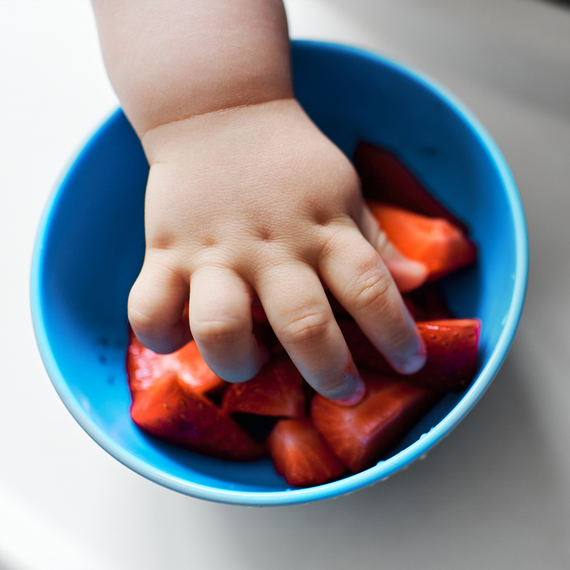
What is baby-led weaning, and how does it work?
With baby-led weaning, the baby is offered soft, bite-sized foods, such as steamed vegetables, pieces of ripe fruit, cubes of cheese, or soft bread without the crust. From this selection, the baby decides for itself what and how much to eat. Feeding purees is completely eliminated.
Ideally, the child eats at the family table from the very beginning and is introduced to solid foods in a playful way. The child reaches for the food on their own and determines both the pace and the amount of the meal. Baby-led weaning can promote independence, support hand-mouth coordination, and introduce babies to different tastes and textures at an early age.
A prerequisite for this method is a balanced, nutrient-rich family diet. It’s important to note that the eating habits of many families aren’t automatically tailored to the needs of infants.
Why Baby-Led Weaning Should Be Viewed with a Critical Eye
One drawback of baby-led weaning is that parents often can’t accurately gauge how much their baby has actually eaten and how much ends up on the side. In addition, many foods suitable for BLW have a low energy density.
With this method, it’s possible that less additional fat - such as in the form of nutritious vegetable oils—is consumed compared to the traditional pureed diet. Since infants have an increased need for fat and essential fatty acids - especially omega-3 fatty acids - it is particularly important to consciously choose nutrient-rich foods.
Furthermore, with baby-led weaning, breast milk or infant formula remains the primary source of nutrients for a longer period than it does for babies fed a traditional porridge-based diet. However, starting at six months of age, these can no longer fully meet all nutritional needs, which is why an insufficient supply of energy and nutrients is suspected.

Incorporating Baby-Led Weaning into Your Daily Routine
Pediatricians and professional associations therefore continue to recommend the gradual and age-appropriate introduction of pureed foods. However, this does not necessarily rule out baby-led weaning. Even babies who are primarily fed pureed foods can occasionally try soft pieces, such as carrots or bananas, and gain their first experiences with solid foods.
Tips for Baby-Led Weaning
- Breast milk or infant formula should remain the primary source of nutrition at least until the end of the first year of life.
- Harder foods such as bread, cookies, crackers, or cereal wafers become softer when chewed and are better suited for older infants.
- Special baby foods dissolve more easily in the mouth and are labeled with age recommendations.
- It is important that foods can dissolve in the mouth and that there is no risk of choking. Nuts or raw carrot pieces are unsuitable.
- The baby should never be left unattended while eating—just as with pureed foods.
- As the baby gets older, they’ll be better able to mash food with their palate, jaw, and later with their first teeth.
Important: Baby-led weaning is not suitable as the sole method for introducing solid foods.
From baby food to solid foods: a natural developmental process
To ensure an adequate supply of nutrients, babies should be fed purees, especially at the beginning of the weaning phase. As they develop, they can gradually start eating more solid foods on their own. This is a completely normal and natural process.
Trust your instincts and pay attention to your baby’s cues. Observe which foods interest them, which they enjoy, and which they can already eat well. The key is to prioritize variety, enjoyment, and the joy of eating. After all, the earlier babies are introduced to healthy foods, the greater the chance of developing positive eating habits in the long term.
FAQs
-
What does "baby-led weaning" mean?
Baby-led weaning (BLW) refers to a method of introducing solid foods in which the baby eats on its own. The baby decides for itself what and how much to eat, while breast milk or infant formula continues to play an important role.
-
When can you start baby-led weaning?
Baby-led weaning is appropriate at the earliest when the baby is ready for solid foods. This includes, among other things, being able to sit safely with support, having good head control, and reaching for food intentionally.
-
Which foods are suitable for baby-led weaning?
Suitable foods include soft, easy-to-grip items such as steamed vegetables, ripe fruit, soft potatoes, or age-appropriate baby foods. It is important that the food can be easily mashed in the mouth.
-
Is baby-led weaning suitable for every baby?
Every baby develops at their own pace. Some children enjoy eating on their own from an early age, while others prefer pureed foods at first. Parents should take their child’s developmental stage into account and remain flexible.
-
What do pediatricians and professional organizations say about baby-led weaning?
Professional organizations continue to recommend a gradual introduction of solid foods, usually starting with purees. Elements of baby-led weaning can be used as a supplement, provided that safety and nutritional needs are taken into account.

Our experts at Alete Family Services are here for you.
If you have questions about nutrition during the weaning stage or about our products, our experienced colleagues at Alete Family Service will be happy to offer you advice and assistance.
Monday through Friday: 9:00 a.m. to 2:00 p.m.
Phone: 0800-1125205
Email: info@alete.de
Important note: If you’re sending us photos with your inquiry, please make sure the total size of the attachments doesn’t exceed 20 MB!