
Snacks for Toddlers

A Guide to Healthy Snacks and a Balanced Diet for Children
Snacking isn’t just fun and tasty - it’s actually especially important for toddlers. They need more energy and nutrients relative to their body weight than adults do, but they have smaller stomachs.
Nutrients such as carbohydrates, protein, fats, vitamins and minerals are essential for growth, development, and daily activities like playing, learning, and physical activity. That’s why more frequent and regular meals are recommended during childhood. In addition to the three main meals - breakfast, lunch, and dinner - ideally, two snacks should be included in the daily schedule.
Encourage intuitive eating and mindful snacking
Every child is different: Very active children - for example, those who play a lot or participate in sports - often need more energy and may require an extra snack.
Pay attention to your child’s hunger and fullness cues. Young children are usually very good at gauging their own needs and intuitively eat exactly as much as they need.
Phrases like “Finish your plate” can disrupt this natural mechanism and lead to unhealthy eating habits in the long run. If your child has a reduced appetite between meals, this is usually nothing to worry about - as long as the pediatrician gives a positive assessment of their development.

When is it time for a snack?
Regular routines provide children with structure and security. Snack times should also have a clear start and end so that eating happens mindfully. This helps your child learn to distinguish mealtimes from other activities.
Our tip:
For most children a second breakfast and an afternoon snack are a good idea. This helps spread their energy intake evenly throughout the day.
Learning to Eat a Balanced Diet
Popular snacks like cake, chocolate spread, chips, or candy are a regular part of many children’s diets. It’s important for children to learn early on that such treats are allowed in moderation. Strict bans usually only increase cravings and make it harder to develop a relaxed attitude toward sweets and healthy eating habits.
Finding the right balance: How many snacks a day are recommended for toddlers?
The Research Department for Child Nutrition (FKE) recommends that, starting in early childhood (age 1 and up), no more than 10% of daily energy intake should come from sweet or savory snacks.
Example: A child between the ages of 4 and 6 needs about 1,250 kcal per day. 10% of that is 125 kcal - roughly one scoop of ice cream, depending on the flavor.
Beware of the Snack Trap
This 10% includes not only candy but also:
- soda
- Nut nougat spread
- Jam
- sugary breakfast cereals
- Instant cocoa powder
If your child, for example, had a roll with jam and a glass of cocoa in the morning, they may have already reached their daily limit.
Rule of thumb for snacks
The following applies to both children and adults: a maximum of one serving of sweets or snacks per day. One serving is the amount that fits in your own hand. This rule is especially helpful when it comes to portion sizes for children. The smaller the hand, the smaller the portion.
Sometimes essential: added salt and sugar
Some foods require sugar or salt to maintain their characteristic flavor or texture. A cookie doesn’t taste like a cookie without sugar, and sugar also gives it its characteristic crumbly texture.
Many people are now turning to alternatives like agave nectar or date syrup. But these, too, naturally contain a lot of sugar - and aren’t automatically healthier.
FAQs About Snacking
-
How many snacks a day are really appropriate for toddlers?
Most children do just fine with two snacks - a second breakfast and an afternoon snack. These help spread out their energy needs evenly throughout the day. However, it’s important to pay attention to individual hunger and fullness cues: very active children sometimes need a little more, while less active children need a little less.
-
What makes for healthy snacks for toddlers?
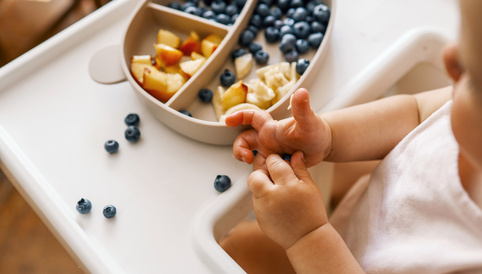
Healthy snacks provide energy and important nutrients - without too much sugar, salt, or fat. Examples include fruit, vegetables, whole-grain products, yogurt, cheese cubes, or homemade granola bars. Sweets and snacks can be included in small amounts, but should account for no more than 10% of your daily energy needs.
-
How can I tell if my child is eating enough or not enough?
Toddlers often eat intuitively - that is, they’re good at listening to their hunger and fullness cues. Fluctuations in appetite are normal. As long as your child is active, growing well, and the pediatrician is satisfied, there’s no reason to worry.
Make sure meals have clear boundaries so your child learns to distinguish between hunger, fullness, and genuine snacks.



Our experts at Alete Family Services are here for you.
If you have questions about nutrition during the weaning stage or about our products, our experienced colleagues at Alete Family Service will be happy to offer you advice and assistance.
Monday through Friday: 9:00 a.m. to 2:00 p.m.
Phone: 0800-1125205
Email: info@alete.de
Important note: If you’re sending us photos with your inquiry, please make sure the total size of the attachments doesn’t exceed 20 MB!