
Ready-to-use products for babies and children

Safe, time-saving, and reliable:
Why Ready-Made Products for Babies and Toddlers Make Sense
As a parent, you want to do everything right - especially when it comes to healthy baby nutrition. At the same time, there are so many different opinions on every topic, which can quickly lead to uncertainty: Are baby food jars healthy? Do ready-made products still contain vitamins? Especially when it comes to feeding babies and toddlers, you need something you can rely on.
Of course, you can cook every meal yourself. Still, high-quality ready-made baby foods are a valuable help in everyday life. They’re among the most strictly regulated foods and offer a reliable alternative thanks to their high safety standards. At Alete, we also use ingredients from certified cultivation and organic sources.
In this article, you’ll get a concise overview of the most important information about ready-made baby foods, their legal requirements, and why you can use them with confidence.
Strict legal requirements for finished products for infants and toddlers
Because of their body weight and their immune systems, which are not yet fully developed, babies and toddlers are more susceptible to harmful environmental influences. Their energy and nutrient requirements also differ significantly from those of older children or adults.
For this reason, foods for babies are subject to particularly strict regulations. According to the Dietary Regulations (the relevant legal basis for complementary foods), products for babies and toddlers must contain significantly lower levels of contaminants than “foods for general consumption.” These strict rules ensure that baby food jars, porridges, and snacks for toddlers are optimally safe and appropriate for their respective age groups.

No Room for Harmful Substances and Additives in Ready-to-Use Products for Infants and Toddlers
Contaminants such as pesticides or heavy metals can enter food through the environment or during production. However, extremely low limits apply to baby food.
For example, the limit for the contaminant aflatoxin B1 in cereal products for babies is 20 times lower than in regular foods. Additives such as flavor enhancers, colorings, and preservatives are also not permitted in ready-to-eat products for babies.
Even the packaging is subject to strict regulations to ensure that no harmful substances can leach into the food. This means that safety is the top priority when it comes to baby food.
Safety and tolerability of ready-to-use products for infants and toddlers are the top priority
Manufacturers are required to ensure that the ingredients, texture, and composition of their products are appropriate for each age group. Babies first have to learn how to chew and swallow, and their digestive systems need time to adjust to new foods.
That is why, when developing new products, we carefully assess - based on scientific evidence - whether all ingredients are suitable for the intended age group.
Our evaluation includes:
- whether the ingredients are easily digestible
- whether the texture supports the development of oral motor skills
- whether the risk of choking is minimized
This ensures the highest level of safety as your child begins eating solid foods and throughout their toddler years.
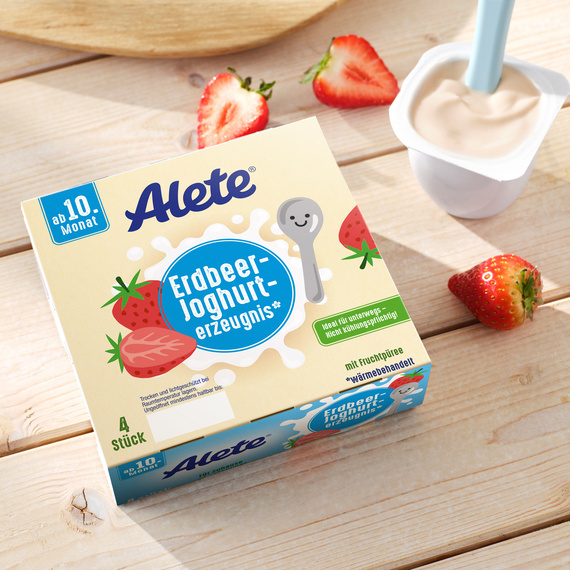

Not only safe, but also useful: Save time with ready-made products for babies
It’s wonderful when your toddler enjoys a home-cooked meal. But moments when you can whip up a healthy meal in just a few minutes are just as precious.
With high-quality ready-made baby foods, you have flexibility when life gets unpredictable. For example, you can quickly enhance a homemade milk-and-cereal porridge with a jar of fruit. And if the menu at a restaurant isn’t quite right yet, your child might enjoy a mild vegetable lasagna from a jar.
A helpful tip: Pay attention to the age recommendation. Products labeled “from 8 months” automatically meet all legal requirements for baby and toddler products.
FAQs
-
Are baby food jars just as healthy as homemade food?
Yes. Baby food jars are subject to stricter controls than regular food. Nutrients are largely preserved through gentle processing, and the products are precisely tailored to babies' needs.
-
Why are stricter limits set for baby food?
Babies are more sensitive to harmful substances because their immune systems are not yet fully developed. For this reason, baby products must comply with extremely low limits and may not contain certain additives.
-
At what age can my baby start eating processed foods?
As soon as you start introducing solid foods (usually between the 5th and 7th month), you can use products that are labeled with an age recommendation - for example, “starting at 6 months.”

Our experts at Alete Family Services are here for you.
If you have questions about nutrition during the weaning stage or about our products, our experienced colleagues at Alete Family Service will be happy to offer you advice and assistance.
Monday through Friday: 9:00 a.m. to 2:00 p.m.
Phone: 0800-1125205
Email: info@alete.de
Important note: If you’re sending us photos with your inquiry, please make sure the total size of the attachments doesn’t exceed 20 MB!