Guide

Tips for Starting Solid Foods

00:00 / 00:00

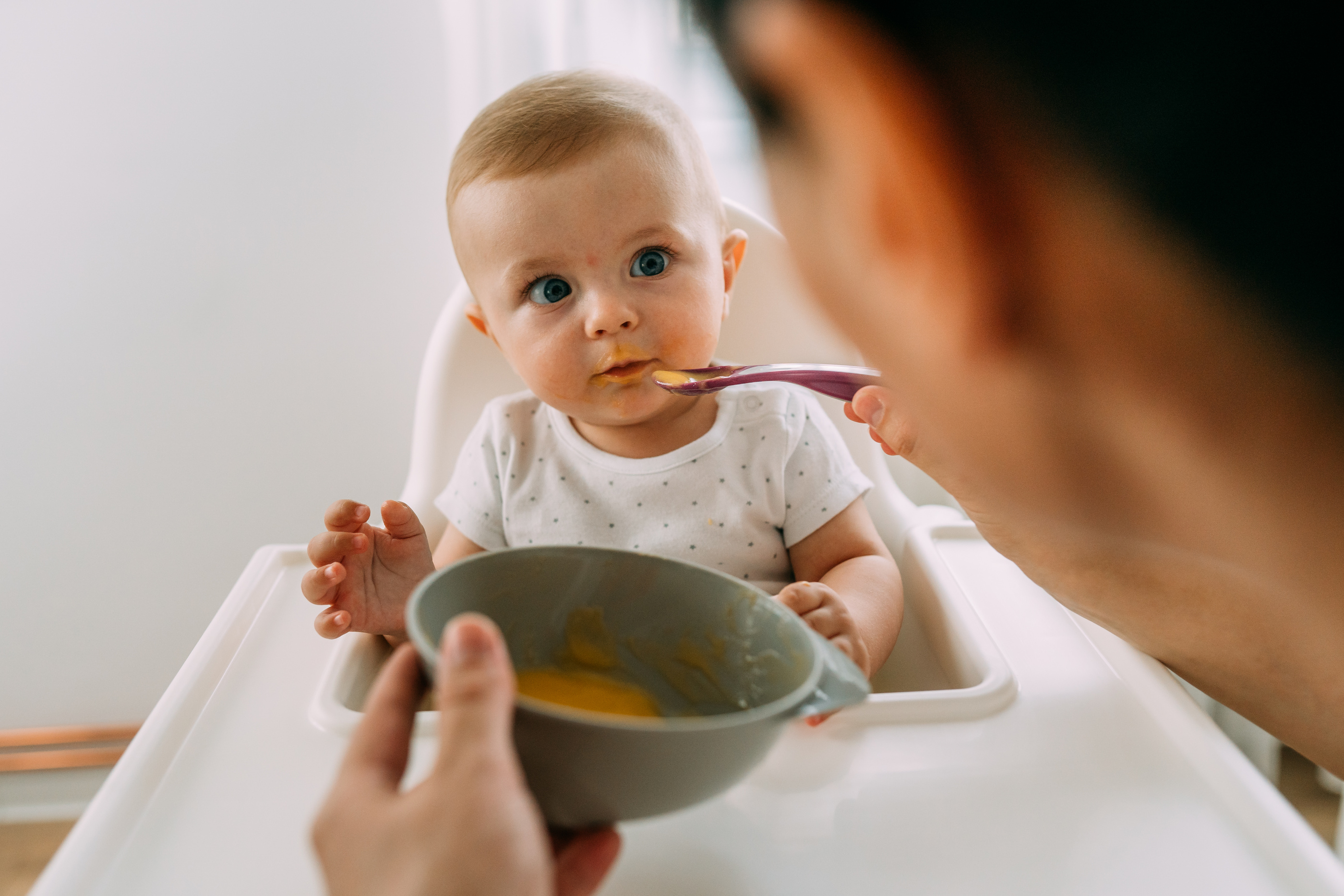
Babysitting beim Essen: Kleinkind in Hochstuhl schaut neugierig auf Löffel mit Brei aus grauer Schüssel.

Introducing Solid Foods - An Exciting Moment

At a certain point, your baby will no longer get enough to eat from breast milk or infant formula alone, and the nutrients they contain will no longer be sufficient on their own to support age-appropriate development. This usually happens no earlier than the 5th month and no later than the 7th month. But every baby is unique and develops at a different pace. And so, the exciting journey into the world of solid foods begins at different times. It’s best to take it slowly, because the transition from breastfeeding to the first pureed meals should be done gradually and in a relaxed manner.

Alete Kind schaut neugierig

Signs It's Time to Start Solid Foods

Are you wondering if your child is ready for solid foods? Don’t worry - your child will let you know when they need extra energy and nutrients in addition to their milk feedings to feel full and happy. There are several signs that your child is ready for their first solid food: 

  • They can hold their head up on their own.
  • Your baby watches you closely while you eat and mimics chewing motions.
  • They open their mouth expectantly, smack their lips, and move their head toward the spoon.
  • The tongue-thrust reflex subsides during feeding. Your child no longer automatically pushes the baby food out of their mouth but begins to chew and swallow.
  • Your baby chews tirelessly on their hands and toys and drools a lot.
  • Impatience increases between meals, and your child is still hungry after breastfeeding.

If one or more of these signs apply to your child, then it’s likely that you’re ready for their first meal with a spoon. If you’re still unsure, talk to your midwife or pediatrician. 

How do I start introducing solid foods?

Over the coming weeks and months, individual milk feedings will gradually be replaced by solid food meals. You’ll usually start at lunchtime, then move on to the evening meal, and finally the afternoon meal. In the morning, you’ll continue to breastfeed or give a bottle for the time being. 

The unfamiliar solid food, the new flavors, and eating from a spoon are an exciting experience and, at the same time, a big challenge for you and your baby. So it makes the most sense to start introducing solid foods when your little one is well-rested, calm, and in a good mood. Don’t be discouraged if your baby pushes the puree out of their mouth with their tongue at first. In the beginning, it’s perfectly normal for your baby to manage only a few spoonfuls. They probably won’t be full the first few times either. So you should breastfeed as usual afterward or give your baby formula. They’ll eat more each time. It takes a little while to get the hang of eating from a spoon. 

A Gradual Transition from Milk to Solid Foods

Is your baby showing signs that they want more than just milk?
Follow these steps to successfully introduce solid foods and transition to family meals.

Lunch
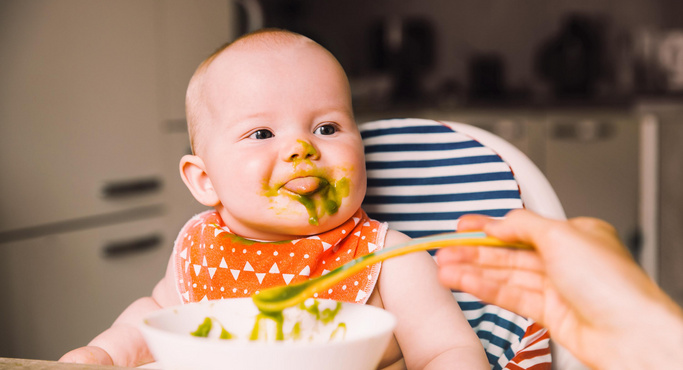
Baby mit grünem Brei im Gesicht, das aus einem Löffel gefüttert wird, sitzt in einem Hochstuhl mit gemusterter Rückenlehne.

Step 1:
Now it's time for some hearty dishes with vegetables and more.

Ideally, you should start introducing solid foods with a hearty lunch. 

Mild-tasting vegetables are best for the first few spoonfuls. It’s important to introduce new foods gradually. 

Whether you cook the food yourself, buy a jar of baby food, or start with “baby-led weaning” is entirely up to you.

Dinner
AI-generated: A smiling toddler wearing a bib with cream on his face, sitting in a high chair with a bowl and spoon.
AI-generated

Step 2:
The nutritious combination of milk and grains

In the evening, serve a milk-and-grain porridge to provide your baby with high-quality, filling protein. 

Here, too, you have several options: make it yourself, use a jar of evening porridge, or try one of our milk-and-grain meals, which are a great alternative if your baby is too tired to eat with a spoon in the evening.

The Afternoon Meal
AI-generated: A father holding a small child in his arms; both are smiling happily in the park, with a swing in the background.
AI-generated

Step 3:
The dairy-free fruit-and-grain meal

Starting around the 8th month, the afternoon snack should be dairy-free. To do this, you can make your own dairy-free fruit-and-grain porridge, use a jar of fruit puree, or give your child an Alete children’s cookie to nibble on along with a banana cut into small pieces to hold. 

Kleines Kind mit Locken, das eine reife Brombeere betrachtet und sie neugierig kostet.

Snacks for Between Meals

Does your little one, who’s just starting solids, often get hungry between meals and get fussy? Just like with their development, kids don’t strictly stick to set schedules when it comes to eating. How could they? They’re still a long way from being able to read and write. In practice, most kids get a little fruit, a cookie, or a few spoonfuls of yogurt—like our Alete Strawberry Yogurt - for those little hunger pangs in between meals. Especially during their first year of life, however, you should pay close attention to what your little foodie eats. That’s because many foods are simply too sweet, too salty, too high in fat, and - most importantly - haven’t been properly tested for harmful substances.

"The Finale": The Transition to the Family Dinner

Once you’ve successfully introduced lunch and dinner purees and the afternoon snack is going well, you can finally replace the morning milk feeding with breakfast. 

Around 10 to 12 months, it’s time to introduce your little one to family meals. By this point, your baby will also be more interested in family life. As soon as they can sit up on their own, they can join you at the family table. It won’t be long before your child starts showing interest in the food on the table. 

During this phase, you can keep varying the menu and trying new things. 

Big things for the little moments.
An overview of our products.

Lächelnde Frau mit Headset, die in einem modernen Büro am Schreibtisch sitzt und bereit für einen Kundenanruf ist.

Our experts at Alete Family Services are here for you.

If you have questions about nutrition during the weaning stage or about our products, our experienced colleagues at Alete Family Service will be happy to offer you advice and assistance.

Monday through Friday: 9:00 a.m. to 2:00 p.m.

Phone: 0800-1125205

Email: info@alete.de

Important note: If you’re sending us photos with your inquiry, please make sure the total size of the attachments doesn’t exceed 20 MB!

back to top