
The
Nutri-Score

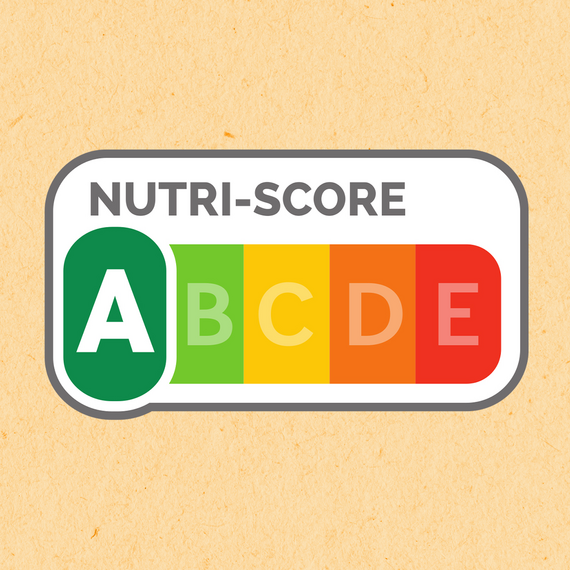
Nutri-Score in Infant Nutrition -
What Should You Keep in Mind?
Have you noticed it while walking through the supermarket? It’s appearing on more and more food products in bright, traffic-light colors: the Nutri-Score. Maybe you’ve thought, “Okay, green is good, red is bad, and yellow is so-so.” But the whole food labeling thing isn’t quite that simple. We’ll explain what you need to look out for with the Nutri-Score.
-
What is Nutri-Score?Nutri-Score is a nutrition labeling system.
It evaluates both the nutritional content and ingredients as well as the proportion of fruits and vegetables in a food product. The goal is to give consumers greater clarity and guidance when choosing foods.
Use of the system is voluntary for manufacturers. However, if a food producer decides to use the Nutri-Score, it must be applied to all products under that brand. This prevents the Nutri-Score from being printed only on foods with higher ratings.
The color scale ranges from A (dark green) to E (red). Foods with a rating in the green zone represent the highest nutritional quality and are therefore a better choice than foods in the red zone.
-
How is the Nutri-Score calculated?The Nutri-Score is determined using a mathematical formula.
Nutrients that are generally considered unhealthy receive negative points. These include calories, saturated fats, sugar, and salt. Beneficial nutrients—such as protein, fiber, fruits, vegetables, high-quality vegetable oils, and nuts—receive positive points. The negative and positive points are then offset against each other. The total score determines the Nutri-Score classification. Beverages, cheese, and fats are evaluated differently.
How should the Nutri-Score be used?
You might be wondering: Should I only eat foods labeled "A" and avoid those rated "E" altogether?
The answer is quite clear: No.
That’s because Nutri-Score simply provides information about nutritional quality; it doesn’t say anything about whether a food is healthy or unhealthy. And just because you only eat products in category A doesn’t automatically mean you’re eating a balanced diet. Rather, the Nutri-Score helps you compare products within the same category—for example, two types of yogurt. If you choose the yogurt with a Nutri-Score of B instead of D, you’ll likely get one with less sugar. Of course, it’s still perfectly fine to eat a chocolate bar with an E rating every now and then.
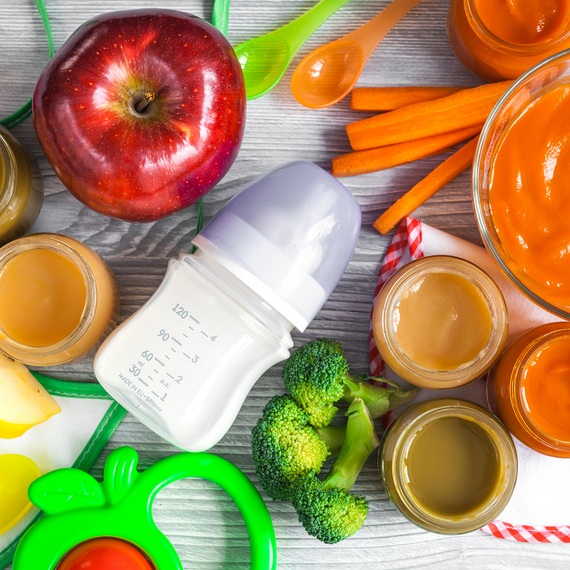
Why isn't there a Nutri-Score on food for babies and toddlers?
The Nutri-Score assessment criteria do not align with the recommendations for the first years of life. Nutri-Score was developed for foods intended for general consumption. This means it is based on dietary recommendations for the general population. However, infants and toddlers are not just small adults and have different nutritional needs.
For example: Babies should consume only small amounts of protein, as too much protein can increase the risk of obesity later in life. The Nutri-Score, however, rates a high protein content positively!
Special legal requirements therefore apply to babies and toddlers, setting precise guidelines for the composition and labeling of these products. You can identify these products by the age indication on the packaging.
Another example is breast milk. It is undisputedly the best nutrition for babies and the only thing they need in the first few months. According to the Nutri-Score rating system, however, breast milk would only receive a “B.” This shows that the Nutri-Score is not suitable for products intended for babies and toddlers.
For which foods is the Nutri-Score useful?
The Nutri-Score may be used on most foods that have a nutrition facts panel on their packaging. It is particularly useful for processed products made from multiple ingredients. It will still not be found on fresh fruits and vegetables, for example, but of course, you should still include plenty of those on your plate.
So what does this mean for you and your family's daily life?
Feel free to use the Nutri-Score to compare different products within a category. But don’t be discouraged if your favorite products don’t have a Nutri-Score. You also don’t have to consistently avoid products with a Nutri-Score of D or E. As mentioned earlier, the label doesn’t indicate whether a food is healthy or unhealthy. In the worst-case scenario, you might end up choosing only low-quality foods and avoiding truly healthy options - such as high-quality olive oil or fish - simply because these products score lower on the Nutri-Score.
A glance at the nutrition facts panel and the ingredients list will still tell you what’s in the product. If you want to know how to create a balanced diet for yourself and your children, common methods - such as the well-known food pyramid - can help. For babies and toddlers, it makes sense to follow the age recommendations on the products, as you’ll find them on our Alete products. This way, you can be sure that the product meets the strict legal requirements for this age group and is suitable for your child at this stage of development.


Our experts at Alete Family Services are here for you.
If you have questions about nutrition during the weaning stage or about our products, our experienced colleagues at Alete Family Service will be happy to offer you advice and assistance.
Monday through Friday: 9:00 a.m. to 2:00 p.m.
Phone: 0800-1125205
Email: info@alete.de
Important note: If you’re sending us photos with your inquiry, please make sure the total size of the attachments doesn’t exceed 20 MB!