
Broccoli: The Vitamin Powerhouse Among Cabbage Varieties
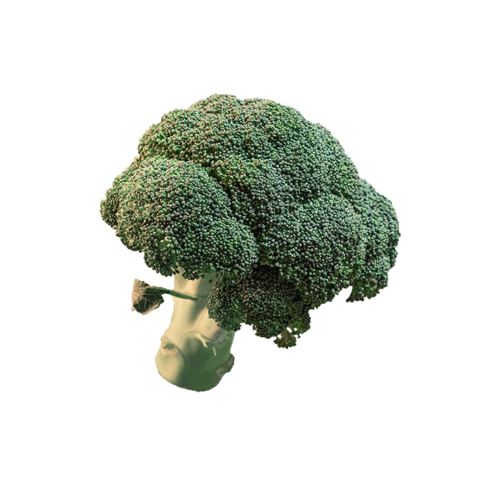
Broccoli belongs to the cabbage family and is rich in vitamins. It did not gain prominence until the 20th century. In Germany, regional cultivation didn’t even take off until the 1980s. Today, broccoli is grown in most countries around the world. In Germany, however, people still prefer locally grown, seasonal broccoli, which is available in stores for about 6 months. 1

Did you know?
Broccoli must be harvested before the flower buds on the head have bloomed. Broccoli wilts and turns yellow quickly at higher temperatures, so it is rapidly cooled to 0–1°C immediately after harvest. If kept at a constant temperature of around 0°C, it can be stored for 2–4 weeks.2
Colorful Diversity All Year Round
Locally grown broccoli is available from late May through November. From late September through early June, broccoli for the German market is primarily sourced from Spain and Italy.
You can choose between green, blue-green, and even purple broccoli. The varieties differ in the shape of the head. They either form a single large head on the main stem or many smaller heads on the side shoots.2
Find out below what else broccoli has to offer and why it’s good for your little foodie’s diet.
Easy to digest
Broccoli is an easily digestible² vegetable. Therefore, it is suitable for introducing solid foods starting at 6 months of age. In addition, babies generally enjoy its slightly nutty flavor.
Provitamin A
Provitamin A is a precursor to vitamin A. It is important for the immune system, vision, the development of skin and mucous membranes, as well as for growth and reproduction.3
Rich in vitamins and minerals
Broccoli is a true source of vitamins and rich in minerals. In addition to provitamin A, vitamin C, and B vitamins, broccoli also contains minerals such as potassium, calcium, phosphorus, and iron.3
Vitamin C
Vitamin C is good for the immune system and helps protect the body's cells. It is also important for connective tissue and wound healing.3
Suitable for babies starting solid foods—from 6 months onward
You can feed your little one these steamed, pureed vegetables as a puree starting at 6 months. As toddlers, children often enjoy seeing the little green "trees" on their plates. However, broccoli should not be offered as a raw food—such as in a salad—until later in childhood or adolescence, as the mustard oils it contains have a very distinct flavor. Mustard oils are responsible for the mild cabbage-like smell.3
If you’d like to learn more about introducing solid foods, take a look at our guide to solid foods.

Here's what broccoli has to offer in terms of nutritional value
Nutritional Values per 100 g 4 |
|
|---|---|
| Energy | 28.2 kcal or 118.0 kJ |
| Protein | 3.8 g |
| Fat | 0.2 g |
| Carbohydrates | 2.7 g |
| Dietary Fiber | 3.0 g |
| Vitamin C | 94.0 mg |
| Vitamin A | 142.0 µg |
| Folic Acid | 39.0 µg |
| Iron | 823.0 µg |
| Calcium | 58.0 mg |
| Potassium | 256.0 mg |
Quellen
1 Schlieper, *Fundamental Questions of Nutrition*, 23rd edition, 2019, p. 222; Federal Information Center for Agriculture, Product Information Flyer, as of January 2018
2 Federal Information Center for Agriculture, Product Information Flyer, as of January 2018
3 Federal Information Center for Agriculture, Product Information Flyer, as of January 2018; www.5amtag.de/wissen/obst-und-gemuese-was-steckt-drin/
4 DGExpert