
Carrots: Root Vegetables with 1,001 Uses
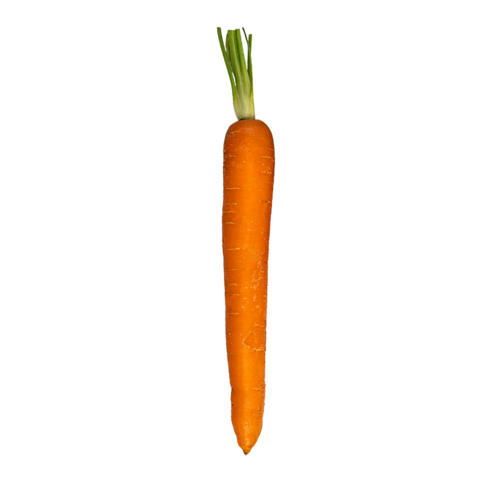
The carrot is a root vegetable that was introduced to Germany in the 14th century. Botanically speaking, it is a type of turnip. Depending on their growth period, carrots are classified as early carrots (60 to 90 days), summer and storage carrots (105 to 130 days), and industrial carrots (165 to 195 days). If you combine different varieties, you can harvest homegrown carrots from late May through late October.1

Did you know?
With an annual purchase volume of 9 kg per household, carrots rank second only to tomatoes among the most commonly purchased vegetables in Germany. Globally, they rank seventh among the most important vegetable types. After asparagus, carrots account for the second-largest area of vegetable cultivation in Germany.1
Carrots All Year Long!
You can find carrots almost year-round, mostly from farms in Germany, the Netherlands, or Italy. Carrots have become a staple on children’s plates because they provide many important nutrients. Find out what else carrots have to offer and why they’re good for your little foodie’s diet.
A Colorful Vitamin Pack
Kids like things colorful. That goes for food, too. With its cheerful color and delicate, sweet flavor, the carrot is an ideal source of provitamin A and B vitamins.
Carotenoids
The carotenoid content also varies depending on the variety: Orange varieties contain mostly beta-carotene, red varieties mostly lycopene, yellow varieties primarily lutein, and purple varieties anthocyanins.2
Dietary Fiber & Potassium
Carrots are high in fiber and contain potassium and B vitamins. They have the highest carotenoid (provitamin A) content of all the vegetables grown in our region.2
Suitable for babies starting solid foods—after 4 months
Thanks to its delicate, slightly sweet flavor, this vegetable is ideal for introducing solid foods. The flavor of carrots depends primarily on the variety and growing conditions. Early-season carrots are particularly mild.1 Always add a little oil to the puree so that the fat-soluble carotenoids can be easily absorbed by the body.
And by the way: Bile soap or an orange carrot bib often helps with carrot stains on clothing ;-)
If you’d like to learn more about introducing solid foods, take a look at our guide to solid foods.

Here's a look at the nutritional value of carrots
Nutritional Values per 100 g2 |
|
|---|---|
| Energy | 33.1 kcal or 138.5 kJ |
| Protein | 0.8 g |
| Fat | 0.2 g |
| Carbohydrates | 6.8 g |
| Dietary Fiber | 3.1 g |
| Vitamin A | 1.6 mg |
| Potassium | 355.0 mg |
Quellen
1 Federal Information Center for Agriculture, Carrot Product Information Flyer, as of January 2019
2 DGExpert