
Canola Oil: The Good Fat
In the 14th century, canola oil was used exclusively as lamp oil and lubricant. Due to its high content of erucic acid, canola oil was not suitable for consumption at that time. Today, there is erucic acid-free “0” rapeseed and “00” rapeseed, which contains fewer glucosinolates and therefore has a milder taste. That is why “00” rapeseed is almost exclusively found in our local supermarkets.

Did you know?
Vitamins A, D, E, and K are fat-soluble vitamins and are absorbed by the body only when combined with fat.1
Fats and oils are essential components of the diet
Fats and oils are often thought of as “fattening,” but they are also essential components of our daily diet. When it comes to fats, as is so often the case in life, it all comes down to the quality of the fat.2 Canola oil, just like sunflower oil, is a vegetable oil extracted from seeds—more specifically, from the cotyledons. Find out what else rapeseed oil has to offer and why it’s good for your little foodie’s diet.
Optimal fatty acid profile ...
Canola oil is recommended by professional organizations for use in complementary feeding because it has a balanced fatty acid profile, making it particularly well-suited for babies.
... for introducing solid foods.
You can use refined or cold-pressed oils. Canola oil has a relatively neutral taste and is therefore well accepted by babies. In addition, oil plays a special role in complementary feeding: it helps the baby absorb nutrients more effectively.
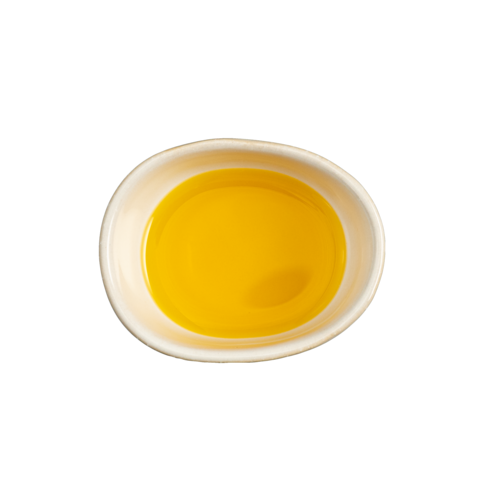
Oils are an essential component ...
Canola oil is particularly rich in alpha-linolenic acid (an omega-3 fatty acid) and linoleic acid (an omega-6 fatty acid) and has a balanced fatty acid composition. Both are essential for humans.3
... nutrition for all ages.
Both alpha-linolenic acid and linoleic acid can lower harmful LDL cholesterol and reduce inflammation in the body. Since the body cannot produce them on its own, they must be obtained through the diet.3
Suitable for babies starting solid foods—after 4 months
Oil comes into play as soon as you introduce the first baby food—specifically when your baby is already familiar with vegetables and is now ready to try a vegetable-and-potato puree. Thanks to its balanced fatty acid composition, canola oil is particularly well-suited for solid foods. This helps babies absorb the nutrients more effectively.
Relative to their body weight, babies at the weaning stage have a higher need for fats. While adults should get about 30% of their daily energy needs from fats, infants at the weaning stage need 35–45% of their energy from fat.4
If you’d like to learn more about introducing solid foods, feel free to check out our guide to solid foods.

Here's a look at the nutritional value of canola oil
Nutritional Values per 100 g 5 |
|
|---|---|
| Fat | 100 g |
| Saturated fatty acids | 9.2 g |
| Monounsaturated fatty acids | 48.9 g |
| Polyunsaturated fatty acids | 23.5 g |
| Omega-6 fatty acids (linoleic acid) | 15.0 g |
| Omega-3 fatty acids (alpha-linolenic acid) | 8.6 g |
| Vitamin A | 550.0 µg |
| Vitamin E | 18.9 mg |
| Vitamin K | 113.0 µg |

Quellen
1 Pocket Atlas of Nutrition, 4th edition
2 “Aktion Kleinkindernährung,” https://www.kleinkind-ernaehrung.de
3 FKE
4 FKE, Reference Values for Nutrient Intake, 1st edition
5 DGExpert